Explore Astronomy Through Geometry
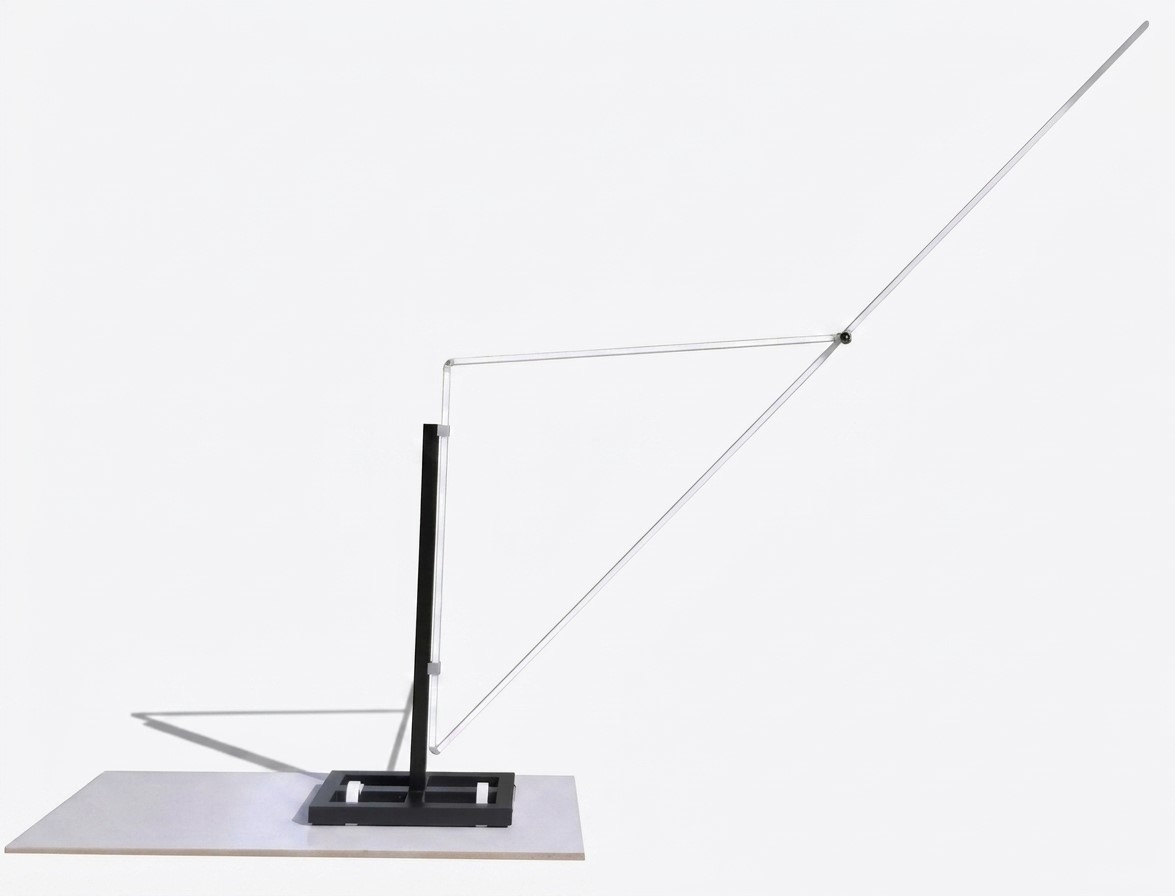
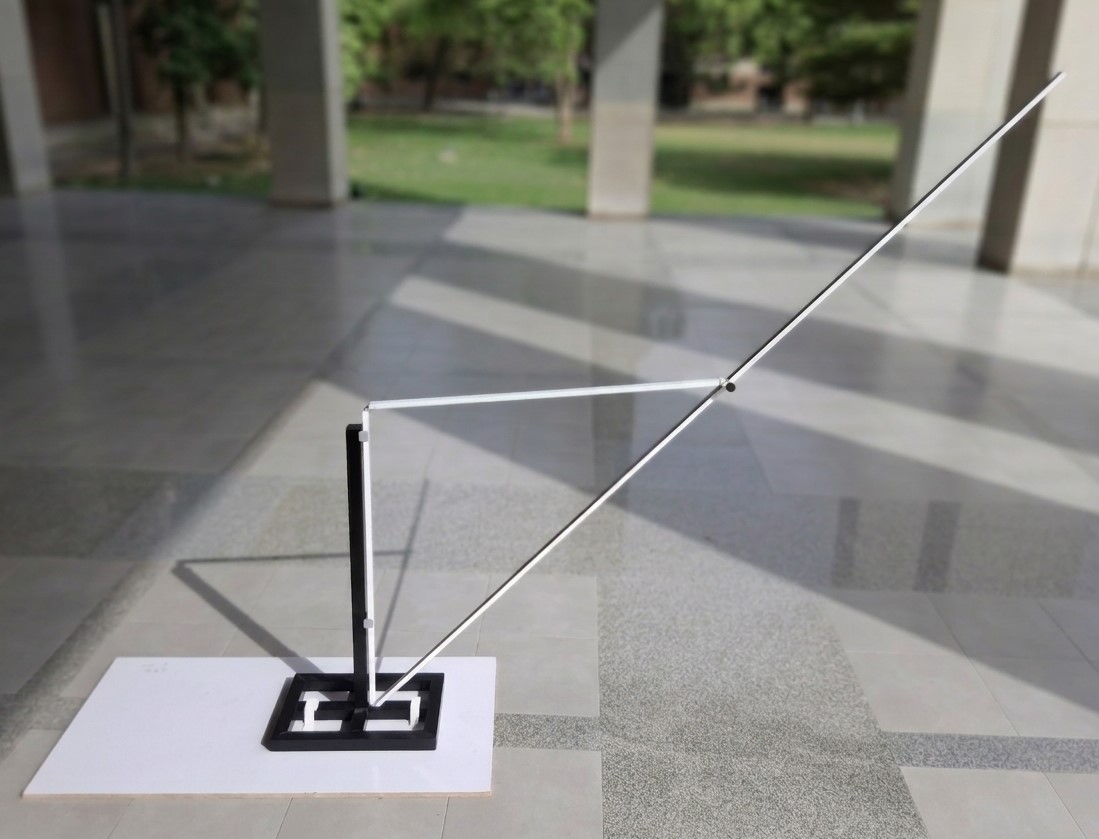
The Triquetrum is a remarkable historical astronomical instrument that demonstrates how geometry and observation were used to study the sky.
Unlike the Quadrant, which uses a graduated curved scale, the Triquetrum uses a system of connected arms and geometric calculations to determine the position of celestial objects.
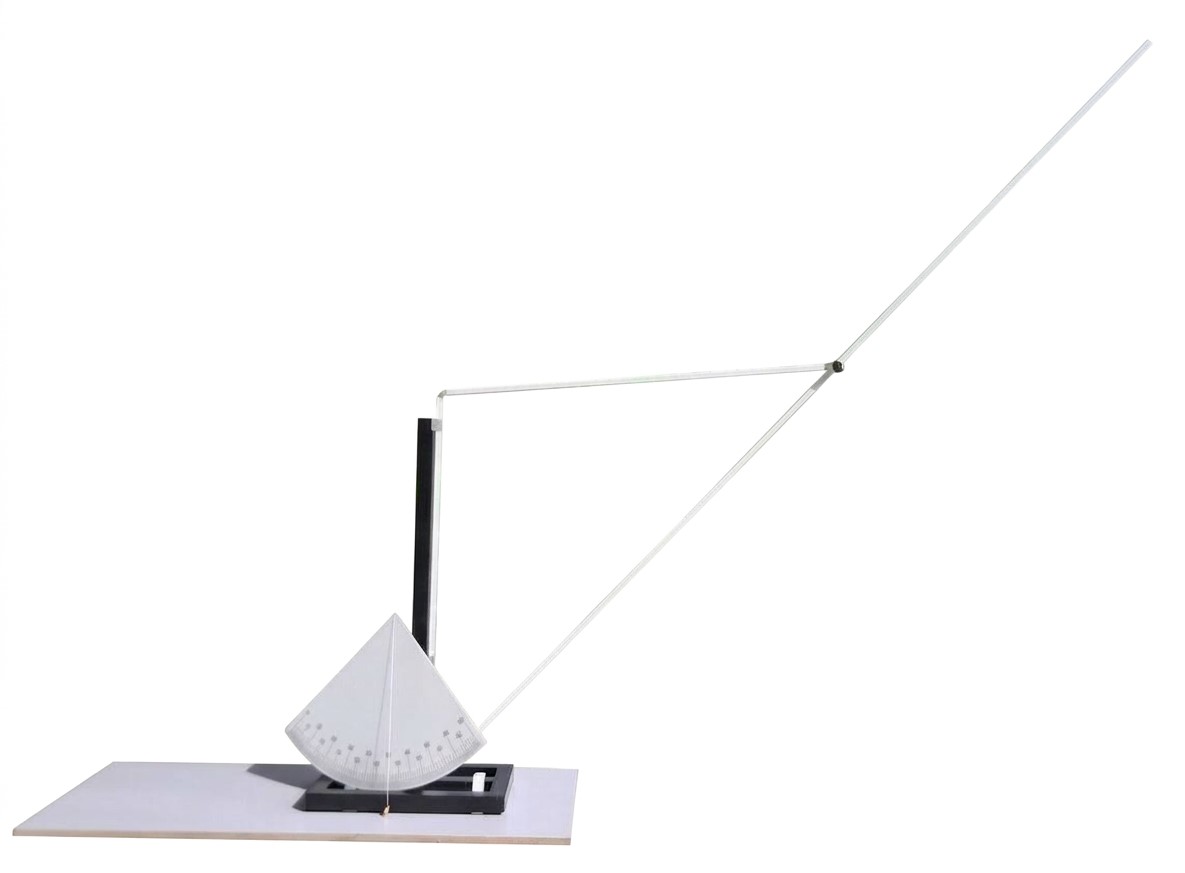
The instrument forms a triangular structure, allowing users to measure the zenith distance of an observed object and then calculate its altitude.
The triquetrum was historically used as an alternative method for measuring celestial positions and was associated with the development of observational astronomy.
How It Works
The Triquetrum consists of a stable supporting structure with connected arms and a movable slider.
To take a measurement:
- Look from the bottom hinge along the ruler arm.
- Move the slider until the celestial target aligns completely with the sight.
- Lock the slider firmly in position.
- Record the position of the slider on the ruler as R, measured in centimeters.
- Use the geometric relationship of the instrument to calculate the zenith distance.
For the setup described in the manual, the instrument forms an isosceles triangle and uses the following equation:
Z = arccos(R / 2L)
Where:
- Z = Zenith Distance
- R = Reading from the ruler arm
- L = Constant length of the supporting and moving arms
In the manual’s version of the setup, both arms have a length of 93 cm.
After calculating the zenith distance, the final altitude is found by subtracting it from 90°.
θT = 90° − Z
Key Features
- Historical astronomical measuring instrument
- Three-part triangular structure
- Adjustable ruler and slider system
- Geometric measurement method
- Designed for celestial observation
- Measures zenith distance
- Calculates astronomical altitude
- Demonstrates the relationship between mathematics and astronomy
- Suitable for practical educational experiments
A Different Approach to Measuring the Sky
The Triquetrum provides a unique hands-on experience because it combines physical observation with mathematical calculation.
Users do not simply read an angle directly. Instead, they:
Observe → Align → Measure → Calculate → Determine Altitude
This makes the Triquetrum an excellent educational tool for demonstrating practical geometry, trigonometry, historical astronomy, and experimental measurement.
The historical design also reflects an important advantage of straight measuring scales: the triquetrum can determine angular relationships through its geometry rather than relying entirely on a graduated circular arc.
Perfect For
- Astronomy laboratories
- Physics education
- Mathematics demonstrations
- Trigonometry experiments
- STEM education
- Universities and schools
- Historical astronomy projects
- Science exhibitions
- Museum demonstrations
Experimental Learning
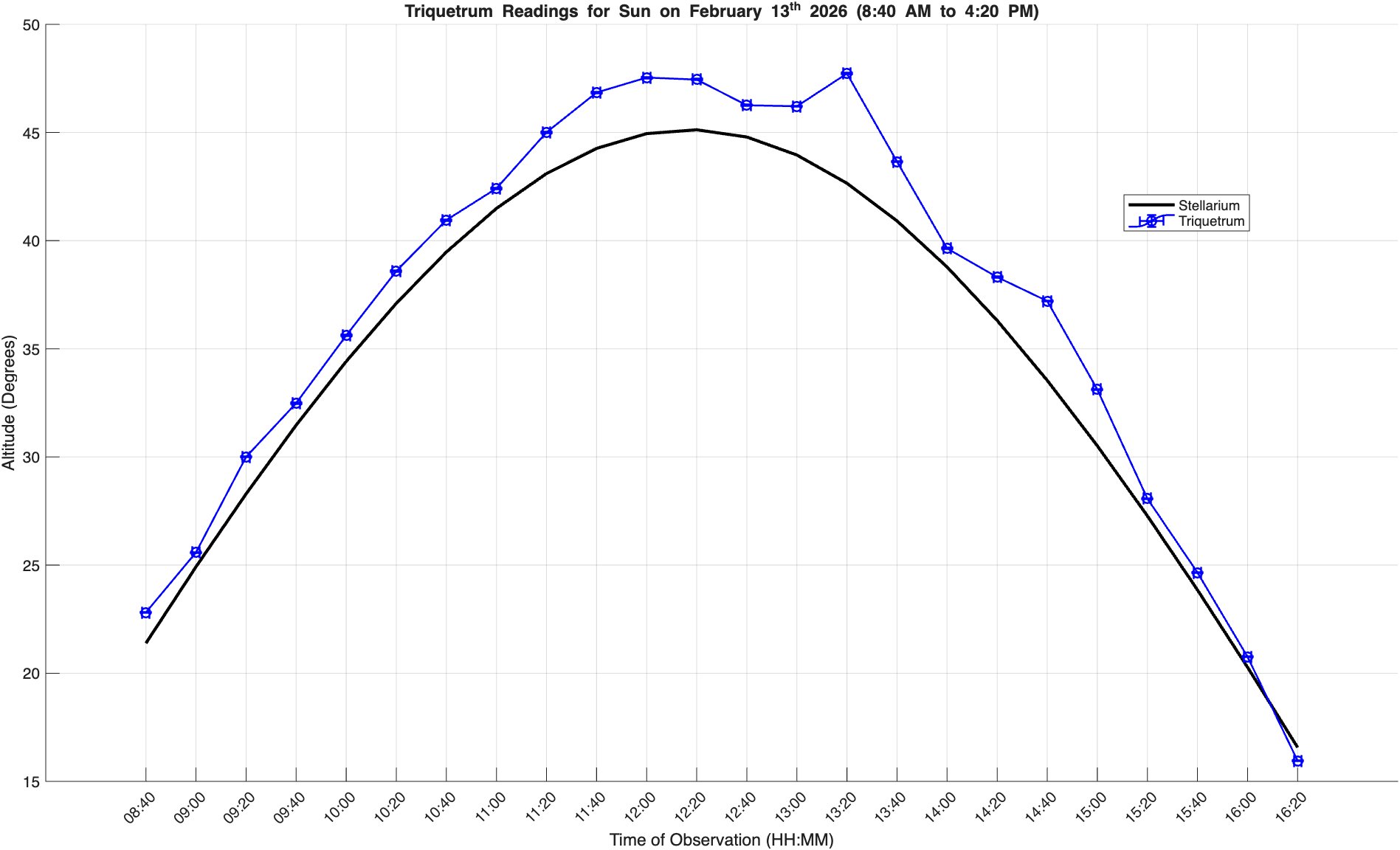
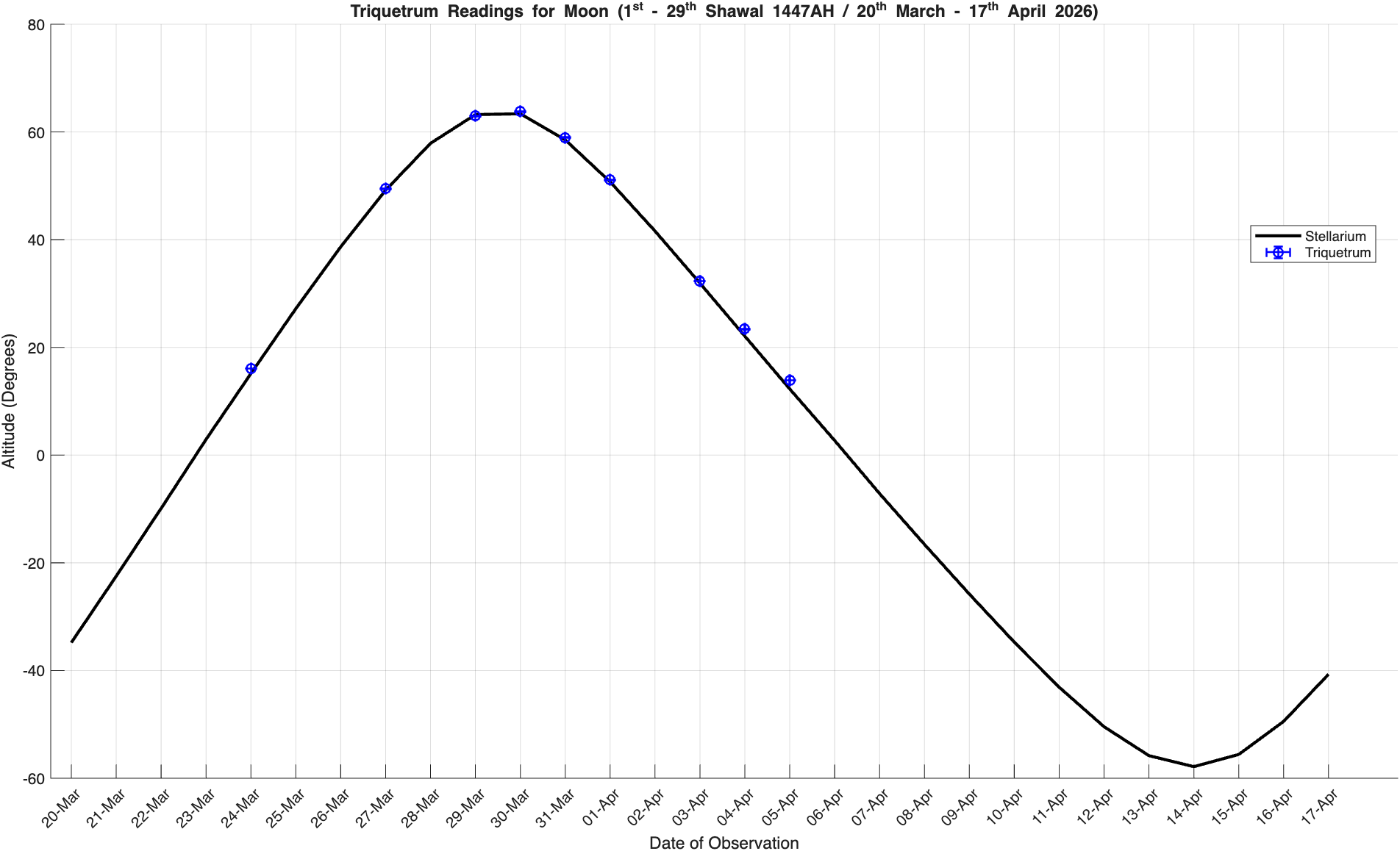
Users can observe the Sun or Moon at regular intervals and record measurements using the Triquetrum. These results can then be compared with modern astronomical software to investigate measurement accuracy.