Discover the Ancient Science of Measuring the Sky
The Quadrant is one of the most important historical instruments used in observational astronomy. Its simple but effective design allows users to measure the angular altitude of celestial objects above the horizon.
Historical astronomical instruments such as the Quadrant played an important role in the development of astronomy from the time of ancient astronomers through the Islamic Golden Age and later scientific traditions.
Our Quadrant brings this historical method into a modern educational and experimental environment.
How It Works
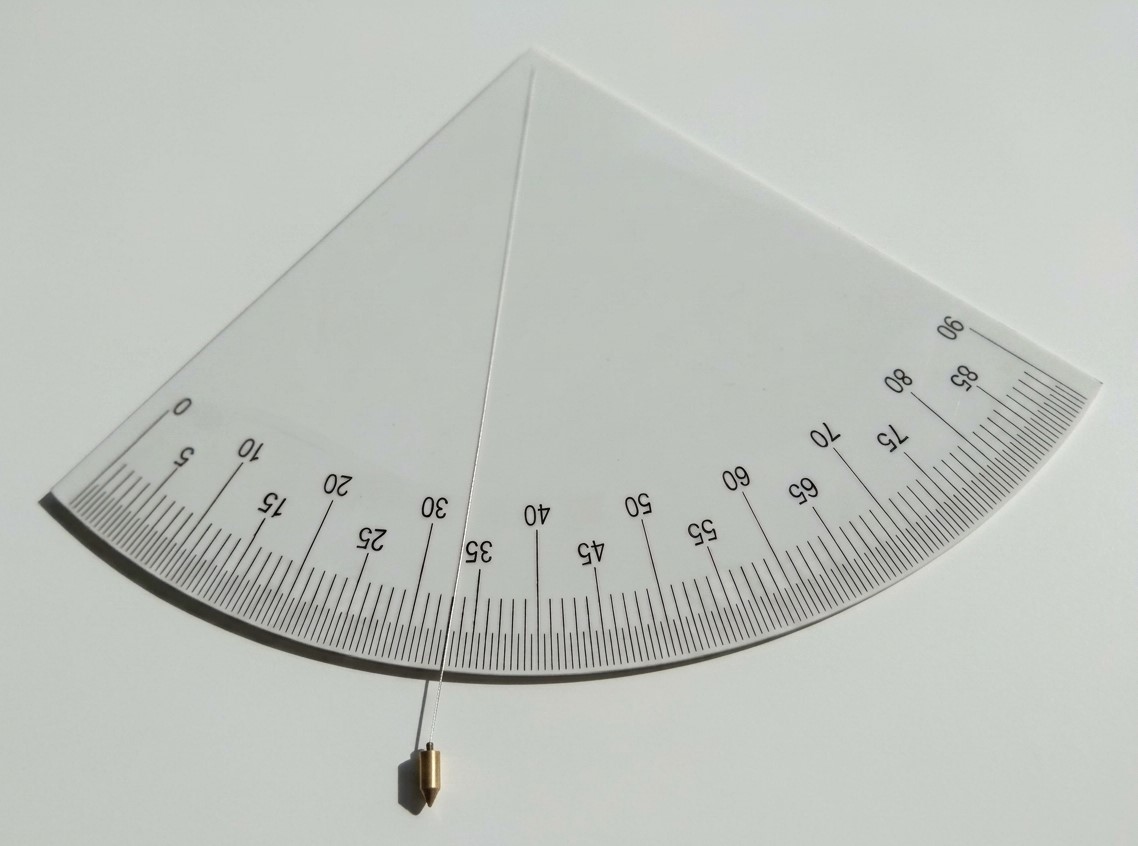
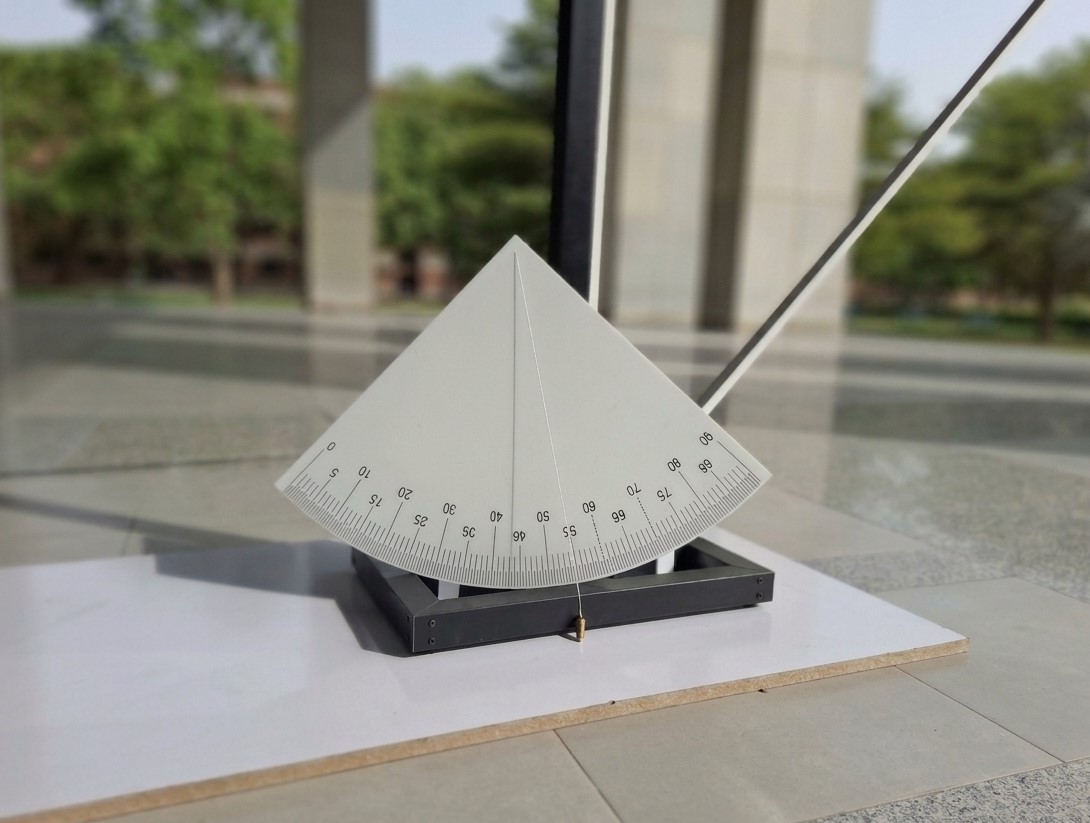
The instrument features a quarter-circle scale ranging from 0° to 90°. A weighted plumb line is attached to the vertex of the Quadrant.
To take a measurement:
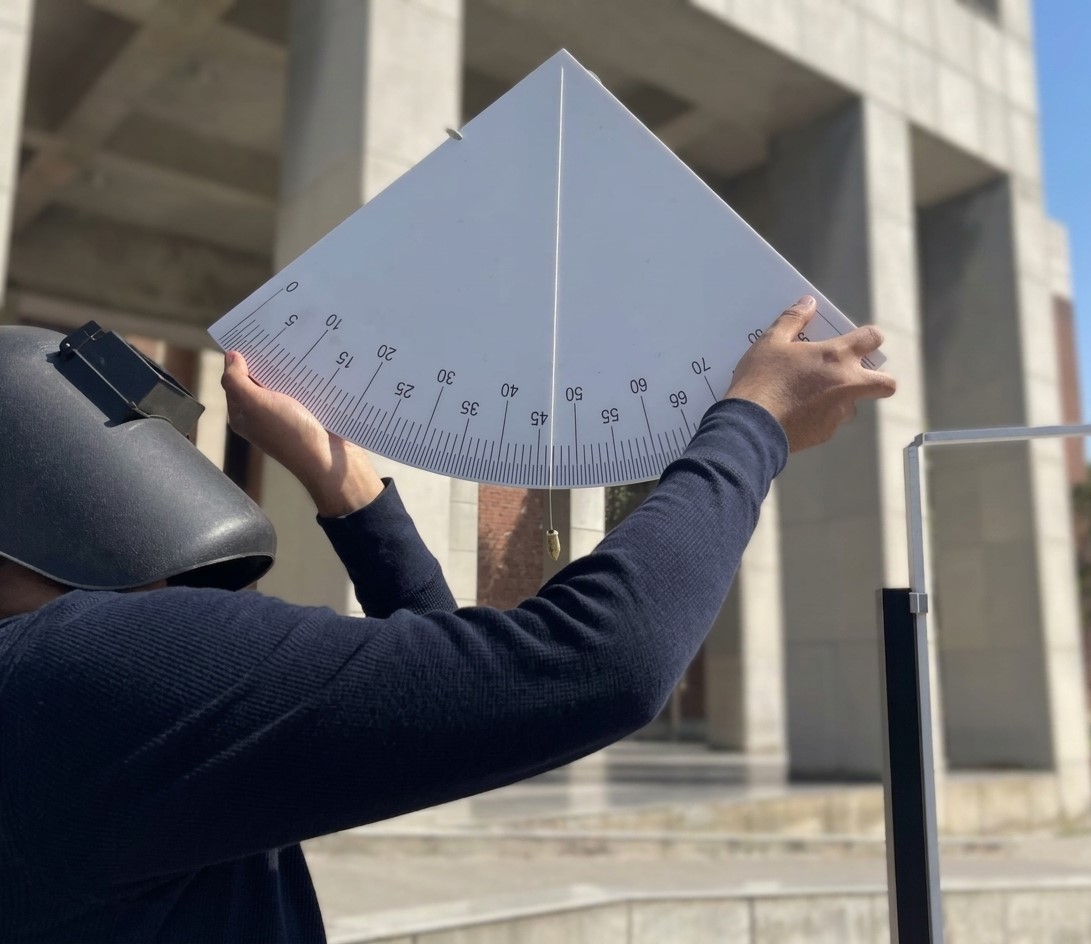
- Aim along the edge where the 0° mark begins.
- Align the instrument with the celestial target.
- Allow the plumb line to hang freely.
- Read the value where the plumb line crosses the graduated scale.
- The reading represents the zenith distance (Z).
- Calculate the altitude using:
Altitude = 90° − Zenith Distance
The manual expresses this as:
θQ = 90° − Z
Key Features
- Historical astronomical instrument
- 0° to 90° graduated scale
- Simple visual alignment system
- Weighted plumb line for measurement
- Designed for hands-on astronomical observation
- Suitable for educational experiments
- Allows comparison between historical measurements and modern astronomical software
Educational Experience
The Quadrant provides a practical way to understand how astronomers measured the heavens before modern digital instruments.
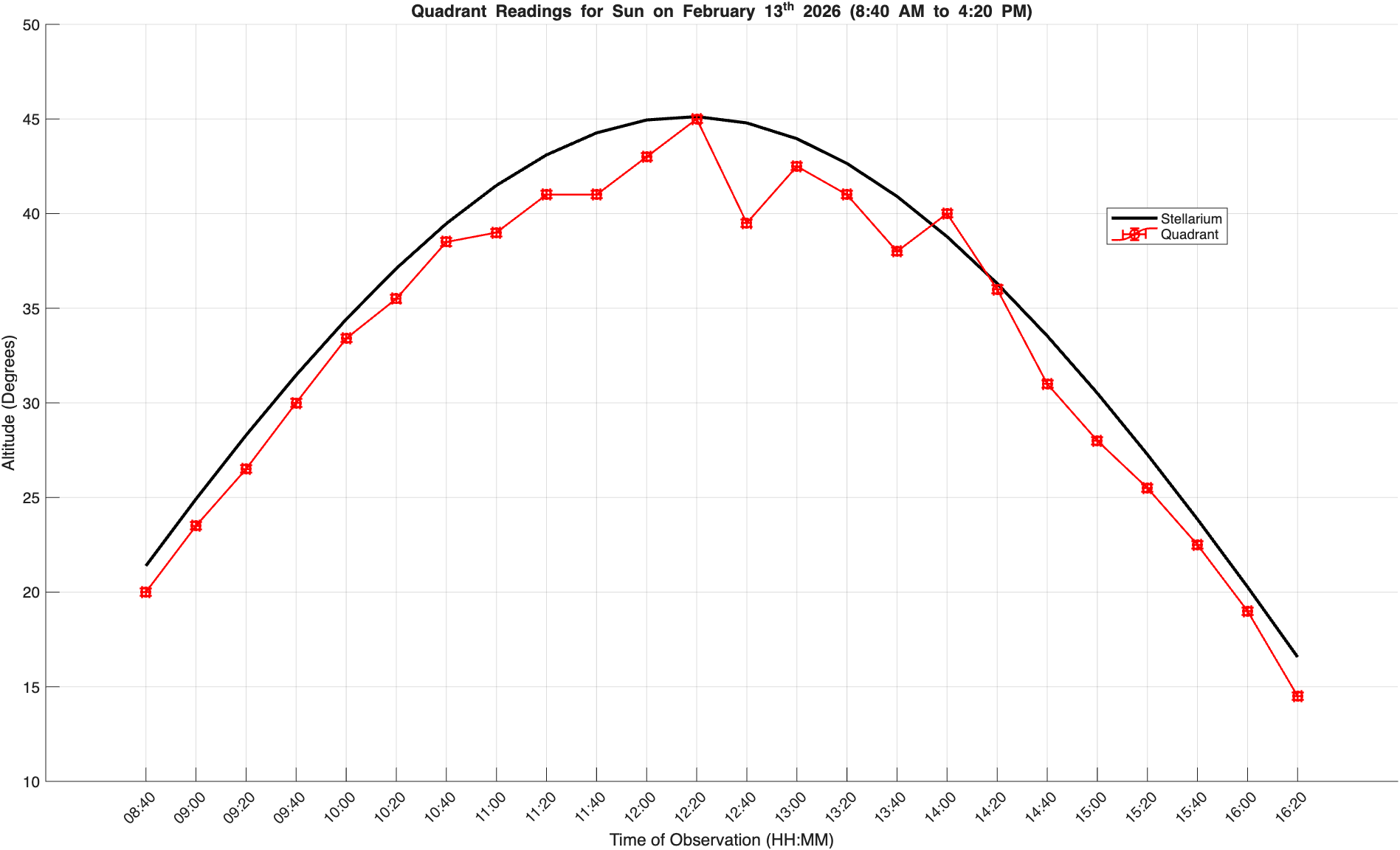
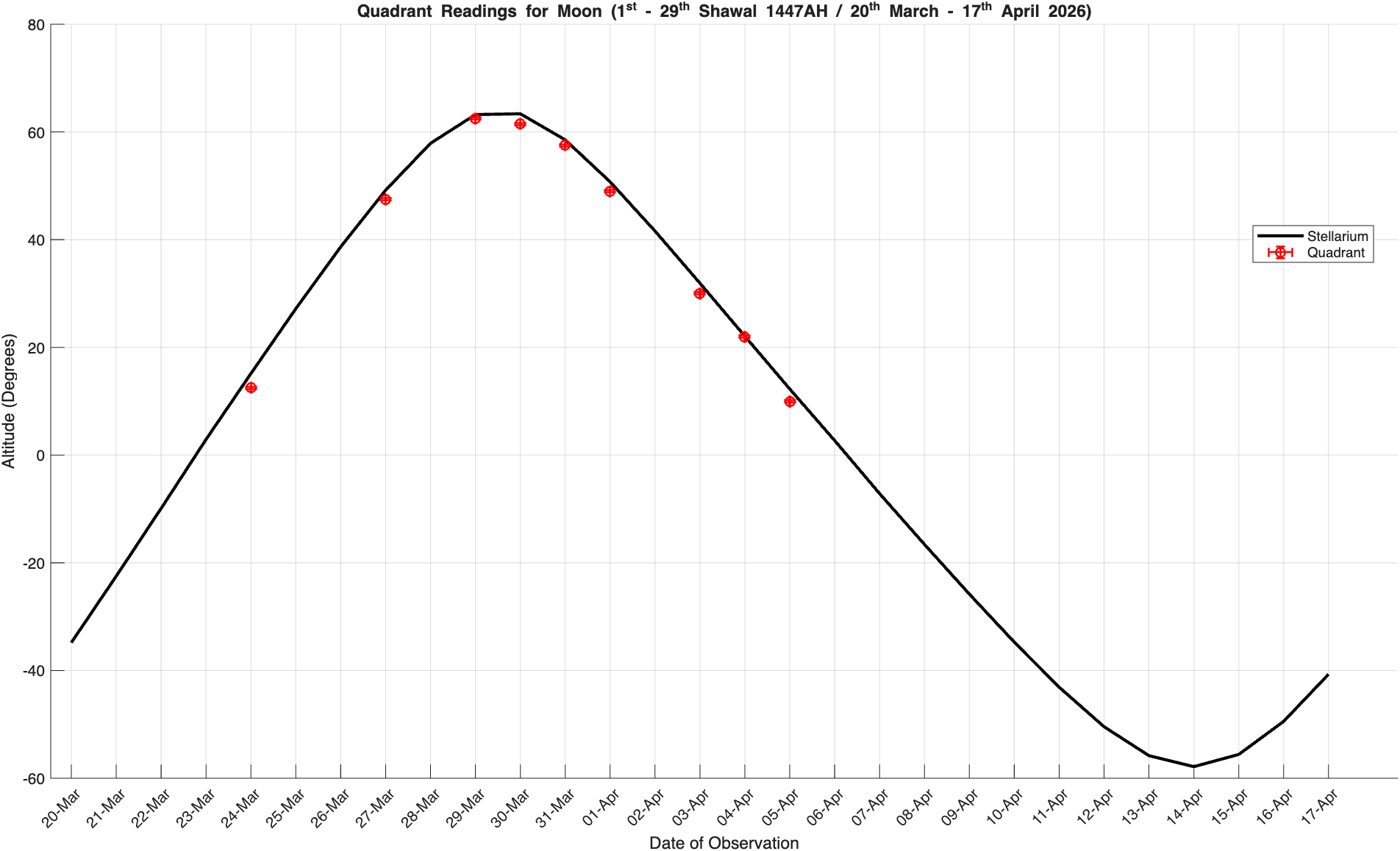
Students and users can observe celestial objects, record measurements over time, and compare their results with modern astronomical data. The manual specifically uses repeated observations of the Sun and Moon to explore changes in celestial altitude.
Perfect For
- Astronomy education
- Physics laboratories
- Schools and universities
- Science museums
- Historical science demonstrations
- STEM activities
- Hands-on astronomical experiments
Important Safety Notice
Never look directly at the Sun without a certified solar filter. Direct observation of the Sun without proper protection can cause permanent and severe eye damage