AstroLAB is an innovative, data-driven laboratory initiative designed to introduce students and visitors to the fundamental principles of modern observational astronomy. Moving beyond traditional textbook learning, AstroLAB bridges the gap between raw astrophysical data and powerful computational tools, preparing the next generation of scientists to navigate today’s highly digital, petabyte-scale scientific landscape.
Originating from strong astrophysical principles, AstroLAB cultivates a deep sense of inquiry by connecting hands-on physical observation with advanced computing. Students explore astronomical objects across a vast spectrum—from the mechanics of our immediate solar system to the behavior of deep-space local galaxies—revealing the profound relationships between real-world observations and current theoretical models of astronomical phenomena.
Learning Outcomes
Introduces students to fundamental observational astronomy through hands-on astrophotography, imaging, and spectroscopy.
Prepares students for the modern, petabyte-scale scientific landscape by navigating digital repositories and global surveys.
Teaches essential data acquisition and reduction techniques to isolate signals from stellar and galactic populations.
Combines powerful computing facilities with analytical tools to model and interpret complex astrophysical datasets.
Empowers students to validate current theoretical models of astronomical phenomena against their own empirical data.
Long before modern technology, second century astronomers like Claudius Ptolemy, and later, practitioners of the Islamic Golden Age, looked up at the stars and designed remarkable tools to measure the heavens.
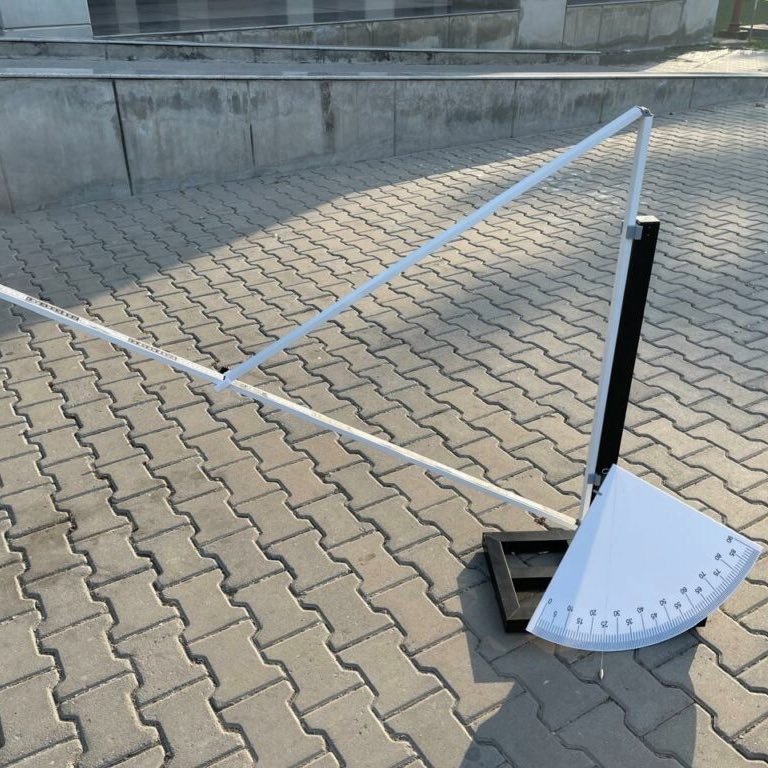
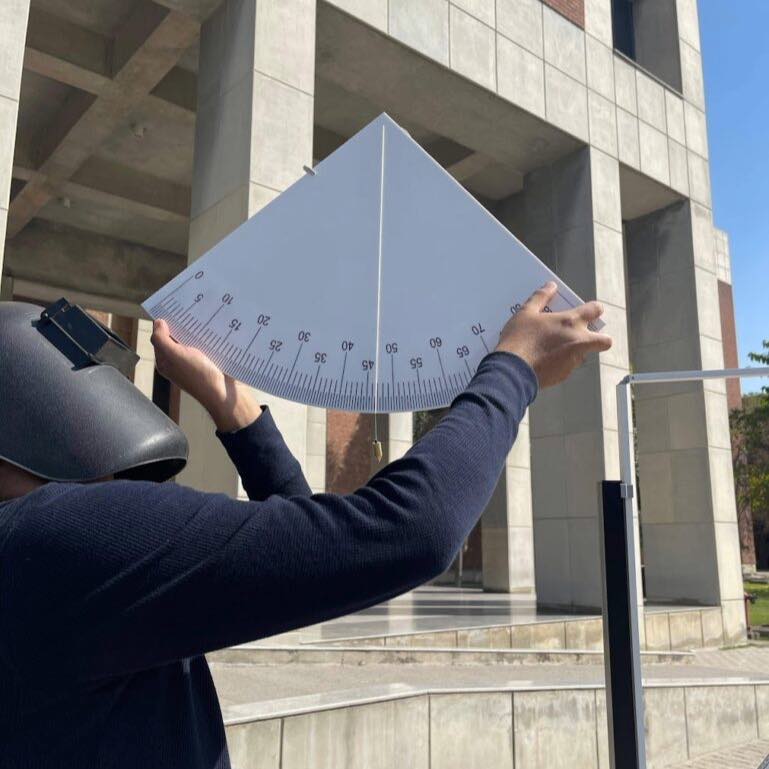
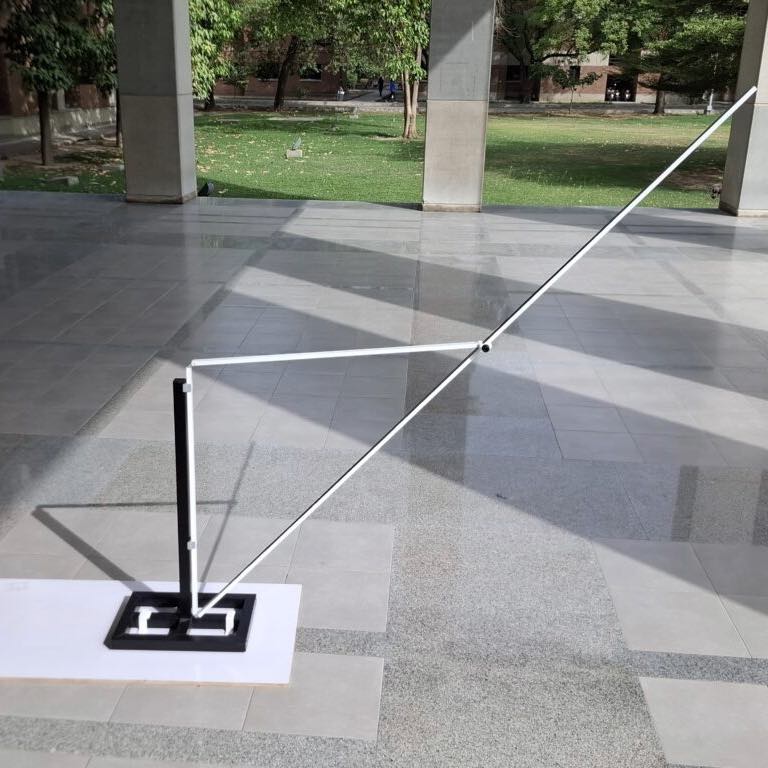
Driven by the need to find the direction of the Qibla and calculate the five daily prayer times, they perfected instruments like the Quadrant (رُبع) and the Triquetrum (العغادۃ الطویلۃ – the long alidade).
In this experiment, which is also a part of the Phenomenon Lab series, invites users to employ modern incarnations but close matches of the quadrant the triquetrum to track heavenly bodies, notably the sun and the moon and compare experimentally observed data with modern softwares.